Archives par mot-clé : Virginia Plain

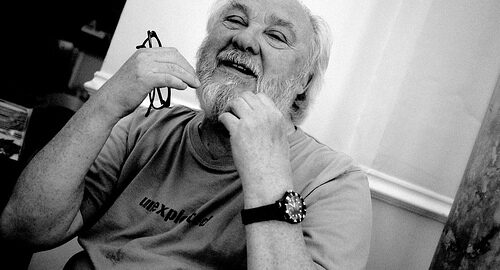
Portrait en noir et blanc de Pete Sinfield, souriant, la main portée à la barbe, à Gênes en 2010

Pete Sinfield on recording Roxy Music's first album and the single "Virginia Plain"

Black and white portrait of Pete Sinfield, smiling, his hand raised to his beard, in Genoa in 2010
Pete Sinfield in Genoa in 2010. Photo: Jomokun / Wikimedia Commons, CC BY-SA 3.0

King Crimson's lyricist, Pete Sinfield produced Roxy Music's debut album in 1972 at Command Studios in London, then the single "Virginia Plain" a few months later. He looks back on tense, rushed sessions, on the explosions he made with a synthesizer, and on a Bryan Ferry who was still learning to be Bryan Ferry.

Lire cette interview en français

I interviewed Pete Sinfield in August 2006, in English. He was recovering from a serious operation and working on a second solo album, more than thirty years after Still, his only solo album, released in 1973. Our conversation was about another album: the one he produced in the spring of 1972 for a band nobody knew yet. His answers are given here as he spoke them, lightly edited for readability.

A founding member of King Crimson, whose lyrics he wrote from In the Court of the Crimson King in 1969 onwards, and who played the VCS3 synthesizer from the audience at the band's concerts, Pete Sinfield left the group at the end of 1971. His managers at EG Management then asked him to produce Roxy Music's first album, recorded in March 1972 at Command Studios in Piccadilly and released on 16 June that year. He went on to write for Emerson, Lake & Palmer, then pop hits for Bucks Fizz and Celine Dion. Pete Sinfield died on 14 November 2024, aged 80.


Laurent Rieppi: Could you tell us how you got involved in producing the first Roxy Music album?

Pete Sinfield: It was very simple. I was managed by some people called EG Management, who managed King Crimson and managed me. And after King Crimson split up, well, went into hiding for a bit, they were taking on new acts, and one of the people they were thinking of taking on was Roxy Music. They asked me to go and see them, and I said, they're extraordinary, they're very imaginative and brilliant. And they decided to sign them. They were not quite sure whether they should sign them. I was absolutely sure, but they were not quite sure. But they are management, you know, not artists. Because we were under the same roof, as it were, I went to some of their rehearsals and one thing led to another. And somebody said, why don't you produce the record? And so I said, I'd love to.

Laurent Rieppi: Where and when was the album recorded?

Pete Sinfield: It was recorded in a hurry, in the middle of 1972, in the summer. I know it was the summer. And it was in a studio called Command Studios, which is in Piccadilly. It was an interesting studio. It was an old BBC recording studio, and it had an original echo chamber with, you know, stone walls. A real old-fashioned echo chamber, which is why some of the echo on the album is really lovely, because it's not done with electronics or springs. It's done with real things. And it was done in this sort of old-fashioned studio, which had very good sound, lots of valves. One of the reasons the album sounds very organic is the actual nature of the old-fashioned studio it was done in.

Author's note: Sources date the recording of the album from 14 to 29 March 1972, with a release on 16 June 1972. "Virginia Plain" was recorded in July 1972.

Laurent Rieppi: What equipment did you use on this record? What multitrack recorder, for example?

Pete Sinfield: It must have been a 24-track. It would have been a… whatever they were called. What are they called? Ampex. An Ampex 24-track. And, very important, the UA compressors. They're called UA. They're sort of old valve compressors which, once again, like some of the stuff in the studio, were sort of old-fashioned, but gave it a very, very nice, almost American sound, perhaps. Not such an English sound. The desk, I can't tell you what the desk was. The engineer was very important. It was a man called Andy Hendriksen and, frankly, without him it would never have been made as well as it was, to the level it is. He gets overlooked. He never gets mentioned, so I thought I should mention him. A guy called Andy Hendriksen was the engineer, and he was magic.

Author's note: UA stands for Universal Audio, an American maker of studio equipment, including compressors. Andy Hendriksen is credited for engineering and mixing on the album.

Laurent Rieppi: How long did it take to record the album?

Pete Sinfield: Well, I think I read it took ten days. I think it must have been a bit longer than that. Maybe I had the band for ten days. I was in the rehearsals with them before, for maybe two or three weeks. They had a lot of material, and we picked… well, more or less, we recorded everything. I think it was about ten days, and maybe I was there for another five days mixing. It was all done very, very quickly. I remember working sixteen hours a day, long hours. It was difficult, because the band were very imaginative, but they were not the best musicians. Not bad musicians, but, you know, some things took a long time to get right. And everyone got a little bit tired, and it was very hot. And then we went back to record "Virginia Plain", because I heard Bryan playing it at a rehearsal after we'd finished the album. We went back for three days to record that.

Laurent Rieppi: Was it a big or a low budget album?

Pete Sinfield: No, it was low. Comparatively low. It was low really just because of the time, because they were starting to go on the road, people were interested in signing them, and the management very much wanted to get them in and out. I can't think what it cost, money in those days… probably about ten thousand pounds, but that was in 1972, so that's whatever that is in today's money. But I think you could say it was low budget, because there weren't extra session musicians really. Except we had to get a bass player, of course, because the bass player, [Graham Simpson], had a nervous breakdown halfway through the record, which didn't make it any easier, and we had to get the bass re-recorded in some circumstances. But it wasn't a big budget.

Author's note: Sources usually put the cost at £5,000 in studio fees, paid by EG Management, as the band had no record deal yet at the time of the sessions. Graham Simpson, credited on bass on the album, later left Roxy Music; Rik Kenton plays bass on "Virginia Plain".

Laurent Rieppi: Do you have a special memory of recording "Re-Make/Re-Model"?

Pete Sinfield: That's the one with all the breaks in, isn't it? That's the one where there's bits of Duane Eddy guitar… I wanted them to quote all sorts of different periods of rock and roll, and I wanted to show off the humour of the band. So that's got the sax going, that's got that "Re-make/Re-model" bit in it. And I think we had a laugh deciding which little bits of music, the Duane Eddy guitar or which things we would try, for fun really. And that was one of the better moments, because a lot of it is quite doomy, and it was tricky to record. There was a lot of tension on some of the synthesizer bits. Unfortunately, I knew how to do them, because I'd had the same synthesizer as Eno for two years before that. But they take a long time, and everybody's sitting around saying, come on, come on, stop doing explosions, we want to do the guitars, if you know what I mean. So I remember it being a lot of pressure, with a few funny moments, because they're very nice people and they're very intelligent people. And the drummer, thank God for Paul [Thompson], is like a clock, which is quite unusual with English drummers. He's just like a rock. So the one thing you could depend on is that you'd have a good drum track. And they say a band is as good as its drummer. Well, that sort of speaks for itself, I think.

Author's note: In "Re-Make/Re-Model", each musician takes a short solo that echoes another work, including the Beatles' "Day Tripper", Duane Eddy's version of "Peter Gunn" and Wagner's "Ride of the Valkyries".

Laurent Rieppi: Can you tell us more about the sound of gunfire and explosions on "The Bob (Medley)"?

Pete Sinfield: Yes, it was made with a machine called a VCS3 synthesizer, using white noise. You filter it and you chop it up. I'd been doing it before with King Crimson. When I was working with King Crimson, I used to be in the audience, doing exactly the same thing as Eno did, really. You take white noise and you either have it unfiltered, so it's a very wide spectrum with lots of bass notes in it, and then you just cut it up and you sort of stab at it, or you can make waves. It's just done with white and pink noise. Simple as that, really, which is what most explosions consist of, as it were. And guns, normally, but we did it without guns. The best way.

Laurent Rieppi: You talked about "Virginia Plain", which was made after the sessions.

Pete Sinfield: It was. We were just in rehearsal, Bryan was at the piano, and I said, what's that? And he was sort of singing the tune. He said, oh, it's a thing I've got an idea for, and I see this beginning with this guitar going… I said, that sounds fantastic, what have you got of it? And he played me some more. I said, that's brilliant, that is what we've needed. Because they were looking for a single, really, and thought it would be "Re-Make/Re-Model", but weren't that happy. We worked on "Virginia Plain" in rehearsals, and I said to the management, we've got to go back to the studio. I had to beg. I said, look, we must, please, please, can we go back and just do this one song? But it was too late to get it on the album. It's on the album now, I think, but on the original album it was too late, because there was such a rush that it had already gone to the factory. And then it came out as a single and, as you know, it did very well, and I'm very proud of it. It's got lots of me in it, and lots of everybody. I think it's fantastic.

Laurent Rieppi: I think "Virginia Plain" was on the US release.

Pete Sinfield: Yes, they put it on the album for America, because that was some time later, but the very first English album, it's not on there. And the ending was my idea, leaving it on the last line of the song and then silence. It was my idea. I'm not sure it was a good idea, but it was mine, so I take the blame.

Laurent Rieppi: It was a good idea, because it's just like a sound signature.

Pete Sinfield: Yes, I suppose. A bit perverse, but there you go.

Author's note: Released as a single on 4 August 1972, "Virginia Plain" reached number four in the UK chart. It was added to the American edition of the album, released at the end of 1972, and to most later reissues.

Laurent Rieppi: Do you have a special memory of recording "Ladytron"?

Pete Sinfield: Yeah. Once again, it was a question of trying to get… What I tried to do, and you can see it more on that record than perhaps on later Roxy Music records, what I like to do, and you can hear it on my King Crimson productions, the first four King Crimson albums, is I love texture and atmosphere, and I like getting that sort of loneliness and lots of space in things. Not like Phil Spector, more like Shadow Morton, perhaps. That's sort of a rather old rock and roll concept, really, getting those echoes right, and getting the loneliness in the voice, and the right echoes. Like John Lennon always got fantastic echoes on his voice, little echo, repeat echo. And I liked having a slightly different sort of colour wash or pastel feeling for each song, and that's the way that one came out, really. It was almost done instinctively, because I'd been in the studio almost completely solidly for two years with King Crimson. I would just go, okay, this needs this, and this needs this, and this needs this. And perhaps sometimes the band would like to have been consulted a little bit more, but we were in a rush, as it were. And I think that's maybe why I drove them a bit crazy making the record, and that's why I didn't do the second one. I think I was perhaps a bit brusque on occasions: no, we must do this, we must do this, we haven't got time. And I think perhaps my part in the record has been underplayed a bit as a result, and perhaps I overplay it a bit. But in the end, I think we're all happy that we did it together.

Author's note: George "Shadow" Morton was the American producer of the Shangri-Las, including "Leader of the Pack" in 1964.

Laurent Rieppi: A few words about "2HB"?

Pete Sinfield: No particular words, but it's just Bryan doing his cinema. You have to remember that Bryan is a painter as well as a singer. I've seen some of his paintings, big dark green and black abstract paintings, and he has this terrific fondness for all things glamorous of the 40s and 50s, and that's what he put into the song. It's Humphrey Bogart, it's a homage to film noir, and one tried to get that character through with the music and the production.

Laurent Rieppi: How would you describe, in a few words, the atmosphere during the recording of this album?

Pete Sinfield: Tense. One word: very tense. One, you've got the bass player having a nervous breakdown. Doesn't help. You've got a guitarist who's quite good, he's much better now, but then, you know… Andy [Mackay] was fantastic, because he was a proper, real musician. He could read the dots, he could do all the arrangements, he could do the things. Bryan was learning to be Bryan. I mean, he was Bryan, you can tell, but he wasn't as in control of his particular Bryan Ferry style. The drummer, as I said, was fantastic. And Eno just sort of… I don't know what he did. He said, we must do this, we must do that, and I said, okay, in a minute, Brian. It was hell, really, but good hell. Like, I suppose, all great artistic projects: you have to suffer to be beautiful. There you go.

Laurent Rieppi: If you could choose only one memory of this recording, what would it be?

Pete Sinfield: I'll tell you exactly what it would be. I couldn't get the mix right on "Virginia Plain", so that's not on the album, but we count it as being on the album, really. The band came in after I'd done it once, and I did it again, and I went, oh God, I couldn't get the beginning right. I'm still not sure it's right. But eventually I did it, and we all looked at each other and said, that's pretty good, let's leave it at that. Because it was a very complicated song to mix, and every time we touched it, it got worse and not better. So we said, that's it. And sometimes there's a moment and we all smile, and I think we went to the pub then for a drink.

Laurent Rieppi: And now, are you still in the music business?

Pete Sinfield: Go and look at my website, Song Soup On Sea, one word. And yes, I've just recorded an old song of mine. I still write songs. I actually had a serious operation this year, but I'm very busy. I'm halfway through my second solo album, the last one being in 1973, so it's been a bit of a delay. But I had a serious operation. It's halfway finished, and I should be finishing it when I come back from holiday in September, October. It's called Thread to Heaven, by the way. I'm going to plug it for myself: Thread to Heaven.

Author's note: This second solo album was never released. Pete Sinfield died on 14 November 2024.

Partager
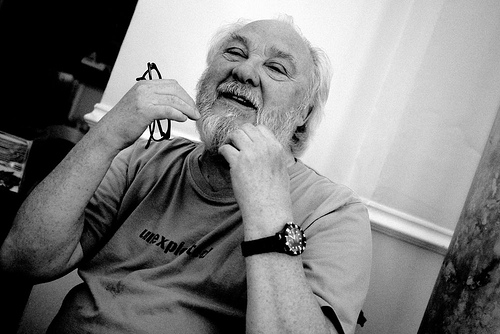
Portrait en noir et blanc de Pete Sinfield, souriant, la main portée à la barbe, à Gênes en 2010

Pete Sinfield et l'enregistrement du premier album de Roxy Music, puis du single "Virginia Plain"

Portrait en noir et blanc de Pete Sinfield, souriant, la main portée à la barbe, à Gênes en 2010
Pete Sinfield à Gênes en 2010. Photo : Jomokun / Wikimedia Commons, CC BY-SA 3.0

Parolier des premiers albums de King Crimson, Pete Sinfield a produit en 1972 le premier album de Roxy Music, enregistré aux Command Studios de Londres, puis le single "Virginia Plain" quelques mois plus tard. Il revient sur des sessions tendues et menées au pas de course, sur les explosions qu'il fabriquait au synthétiseur et sur un Bryan Ferry qui apprenait encore à devenir Bryan Ferry.

Read this interview in English

C'est en août 2006 que j'ai interviewé Pete Sinfield, en anglais. Il se remettait alors d'une lourde opération et travaillait à un deuxième album solo, plus de trente ans après Still, son seul album personnel, paru en 1973. Notre conversation portait sur un autre album, celui qu'il a produit pour un groupe encore inconnu au printemps 1972.

Membre fondateur de King Crimson, dont il a écrit les textes dès In the Court of the Crimson King en 1969, et qui manipulait en concert, depuis la salle, le synthétiseur VCS3, Pete Sinfield quitte le groupe à la fin de l'année 1971. Ses managers d'EG Management lui confient alors la production du premier album de Roxy Music, enregistré en mars 1972 aux Command Studios, sur Piccadilly, et sorti le 16 juin suivant. Il écrira ensuite pour Emerson, Lake & Palmer, puis des succès pop pour Bucks Fizz ou Céline Dion. Pete Sinfield est mort le 14 novembre 2024, à l'âge de 80 ans.


Laurent Rieppi : Comment avez-vous été amené à produire le premier album de Roxy Music ?

Pete Sinfield : Très simplement. J'étais géré par EG Management, qui s'occupait de King Crimson et de moi. Après la séparation de King Crimson, ou plutôt pendant que le groupe s'était mis à l'écart quelque temps, ils prenaient de nouveaux artistes, et parmi ceux qu'ils envisageaient de signer, il y avait Roxy Music. Ils m'ont demandé d'aller les voir, et je leur ai dit que ces musiciens étaient extraordinaires, très imaginatifs, brillants. Mes managers n'étaient pas tout à fait sûrs de devoir les signer. Moi, j'en étais absolument certain, mais eux, ce sont des managers, vous savez, pas des artistes. Comme nous étions dans le même bain, j'ai assisté à quelques répétitions, une chose en a entraîné une autre, et quelqu'un m'a demandé pourquoi je ne produirais pas l'album. J'ai répondu que j'adorerais le faire.

Laurent Rieppi : Où et quand l'album a-t-il été enregistré ?

Pete Sinfield : Il a été enregistré dans l'urgence, au milieu de l'année 1972, en été. Je sais que c'était l'été. C'était dans un studio appelé Command Studios, sur Piccadilly. C'était un studio intéressant, un ancien lieu d'enregistrement de la BBC, qui possédait une véritable chambre d'écho à l'ancienne, avec des murs de pierre. C'est pour cela que certains échos de l'album sont si beaux : ils ne sont pas obtenus avec de l'électronique ou des ressorts, mais avec de vraies choses. Ce studio à l'ancienne avait un très bon son et beaucoup d'appareils à lampes, et l'une des raisons pour lesquelles l'album sonne de façon si organique tient à la nature même du lieu où il a été fait.

Note de l'auteur : Les sources situent l'enregistrement de l'album entre le 14 et le 29 mars 1972, pour une sortie le 16 juin 1972. "Virginia Plain" a été enregistré en juillet 1972.

Laurent Rieppi : Quel matériel avez-vous utilisé ? Quel magnétophone multipiste, par exemple ?

Pete Sinfield : Ce devait être un 24 pistes, de la marque… comment s'appelaient-ils déjà ? Ampex, un Ampex 24 pistes. Autre élément très important, les compresseurs UA, de vieux compresseurs à lampes qui, comme beaucoup de choses dans ce studio, étaient un peu d'un autre temps, mais qui donnaient un son très, très agréable, un son peut-être un peu américain, moins anglais. La console, je ne saurais pas vous dire laquelle c'était. L'ingénieur du son a lui aussi été très important. C'était un homme appelé Andy Hendriksen et, franchement, sans lui, l'album n'aurait jamais été aussi bien fait, il n'aurait jamais atteint ce niveau. On l'oublie toujours, on ne le cite jamais. Je tenais à le mentionner, parce qu'un type comme Andy Hendriksen, c'était magique.

Note de l'auteur : UA désigne Universal Audio, fabricant américain de matériel de studio, dont des compresseurs. Andy Hendriksen est crédité comme ingénieur du son et pour le mixage de l'album.

Laurent Rieppi : Combien de temps a pris l'enregistrement ?

Pete Sinfield : J'ai lu, je crois, que cela avait pris dix jours, mais cela a dû être un peu plus long. J'avais peut-être le groupe pour dix jours. Avant cela, j'avais suivi leurs répétitions pendant deux ou trois semaines. Ils avaient beaucoup de matériel, et nous avons tout enregistré. Je pense que cela a duré une dizaine de jours, et je suis peut-être resté cinq jours de plus pour le mixage. Tout a été fait très, très vite. Je me souviens de journées de seize heures, de très longues heures. C'était difficile, parce que les musiciens étaient très imaginatifs mais n'étaient pas les meilleurs instrumentistes. Ce n'étaient pas de mauvais musiciens, mais certaines choses prenaient beaucoup de temps avant d'être justes. Tout le monde a fini par être un peu fatigué, et il faisait très chaud. Ensuite, nous sommes retournés en studio pour enregistrer "Virginia Plain", parce que j'avais entendu Bryan le jouer pendant une répétition, une fois l'album terminé. Nous y avons passé trois jours.

Laurent Rieppi : Était-ce un album à gros ou à petit budget ?

Pete Sinfield : Un petit budget. Enfin, relativement petit. Il était petit surtout à cause du temps disponible. Les musiciens commençaient à partir sur la route, des gens s'intéressaient à eux pour les signer, et le management voulait vraiment les faire entrer en studio et les en faire sortir rapidement. Je ne sais plus ce que cela a coûté, probablement autour de 10 000 livres, mais c'était en 1972, je vous laisse calculer ce que cela représente aujourd'hui. On peut dire que c'était un petit budget, parce qu'il n'y avait pas vraiment de musiciens de session en plus. Il a quand même fallu trouver un bassiste, évidemment, parce que le bassiste du groupe, Graham Simpson, a fait une dépression nerveuse au milieu de l'enregistrement, ce qui n'a rien facilité, et il a fallu réenregistrer la basse sur certains passages. Mais ce n'était pas un gros budget.

Note de l'auteur : Les sources citent généralement un coût de 5 000 livres de frais de studio, avancés par EG Management, le groupe n'ayant pas encore de contrat avec une maison de disques au moment des sessions. Graham Simpson, crédité à la basse sur l'album, quitte ensuite Roxy Music ; c'est Rik Kenton qui joue la basse sur "Virginia Plain".

Laurent Rieppi : Avez-vous un souvenir particulier de l'enregistrement de "Re-Make/Re-Model" ?

Pete Sinfield : C'est celui avec toutes les ruptures, n'est-ce pas ? Celui où j'ai glissé des passages de guitare à la Duane Eddy. Je voulais que les musiciens citent toutes sortes d'époques différentes du rock'n'roll, et je voulais montrer l'humour du groupe. Il y a le saxophone, il y a ce passage où l'on scande le titre, et je crois que nous avons bien ri en choisissant les petits bouts de musique à y glisser, la guitare à la Duane Eddy et le reste, pour le plaisir en somme. C'est l'un des meilleurs moments, parce qu'une grande partie de l'album est assez sombre et qu'il a été délicat à enregistrer. Il y avait beaucoup de tension, notamment sur certaines parties de synthétiseur. Malheureusement, je savais comment les obtenir, parce que j'avais le même synthétiseur que Brian Eno depuis deux ans. Mais elles prennent beaucoup de temps, et tout le monde attendait en disant : allez, allez, arrêtez de faire des explosions, on veut faire les guitares, si vous voyez ce que je veux dire. Je me souviens donc de beaucoup de pression, avec quelques moments drôles, parce que ce sont des gens très gentils et très intelligents. Et le batteur, Paul Thompson, Dieu merci, est réglé comme une horloge, ce qui est assez rare chez les batteurs anglais. C'est un roc. La seule chose sur laquelle on pouvait compter, c'était d'avoir une bonne piste de batterie. On dit qu'un groupe vaut ce que vaut son batteur. Cela se passe de commentaire, je crois.

Note de l'auteur : Dans "Re-Make/Re-Model", chaque musicien prend un court solo qui fait écho à une autre œuvre, parmi lesquelles "Day Tripper" des Beatles, la version de "Peter Gunn" enregistrée par Duane Eddy et "La Chevauchée des Walkyries" de Wagner.

Laurent Rieppi : Pouvez-vous nous parler des bruits de coups de feu et d'explosions que l'on trouve sur "The Bob (Medley)" ?

Pete Sinfield : Oui, ils ont été fabriqués avec une machine appelée synthétiseur VCS3, à partir de bruit blanc que l'on filtre et que l'on découpe. Je le faisais déjà avec King Crimson : quand je travaillais avec eux, j'étais dans le public à faire exactement ce que faisait Brian Eno, en somme. On prend du bruit blanc, soit sans filtre, avec un spectre très large et beaucoup de graves, et on le découpe en le frappant par à-coups, soit on le module pour former des vagues. Tout est fait avec du bruit blanc et du bruit rose. C'est aussi simple que ça, et c'est de cela que sont faites la plupart des explosions, en quelque sorte. Et des coups de feu, normalement, mais nous l'avons fait sans armes. C'est la meilleure façon.

Laurent Rieppi : Vous évoquiez "Virginia Plain", enregistré après les sessions de l'album.

Pete Sinfield : Oui. Nous étions en répétition, Bryan était au piano, et je lui ai demandé ce que c'était. Il chantonnait la mélodie et il m'a répondu que c'était une idée qu'il avait. Il imaginait le début avec cette guitare, et je lui ai dit que cela sonnait de façon fantastique. Je lui ai demandé ce qu'il en avait déjà, il m'en a joué davantage, et je lui ai dit que c'était brillant, que c'était exactement ce dont nous avions besoin, parce qu'ils cherchaient un single. On pensait que ce serait "Re-Make/Re-Model", mais personne n'en était vraiment satisfait. Nous avons travaillé "Virginia Plain" en répétition, puis j'ai dit au management qu'il fallait retourner en studio. J'ai dû les supplier : s'il vous plaît, est-ce qu'on peut y retourner pour enregistrer juste ce titre ? Mais c'était trop tard pour l'album. Il figure sur l'album aujourd'hui, je crois, mais sur l'album original, c'était trop tard, parce que tout s'était fait dans une telle urgence que l'album était déjà parti à l'usine. Il est donc sorti en single et, comme vous le savez, il a très bien marché. J'en suis très fier. Il y a beaucoup de moi dedans, et beaucoup de chacun. Je trouve ce titre fantastique.

Laurent Rieppi : Je crois que "Virginia Plain" figurait sur l'édition américaine de l'album.

Pete Sinfield : Oui, ils l'ont ajouté à l'album pour l'Amérique, parce que celui-ci est sorti un peu plus tard là-bas, mais il ne figure pas sur le tout premier album anglais. Et la fin, où le titre s'arrête net sur le nom de Virginia Plain avant un silence, c'était mon idée. Je ne suis pas sûr que c'était une bonne idée, mais c'était la mienne, alors j'en assume la responsabilité.

Laurent Rieppi : C'était une bonne idée, c'est comme une signature sonore.

Pete Sinfield : Oui, je suppose. Un peu tordu, mais voilà.

Note de l'auteur : Sorti en single le 4 août 1972, "Virginia Plain" atteint la quatrième place du classement britannique. Il est ajouté à l'édition américaine de l'album, parue fin 1972, puis à la plupart des rééditions.

Laurent Rieppi : Avez-vous un souvenir particulier de l'enregistrement de "Ladytron" ?

Pete Sinfield : Oui. Là encore, il s'agissait d'obtenir ce que je cherchais à faire, et on le perçoit davantage sur cet album que sur les albums suivants de Roxy Music. Ce que j'aime faire, et on le retrouve sur mes productions pour King Crimson, les quatre premiers albums du groupe, c'est travailler la texture et l'atmosphère. J'aime obtenir cette sorte de solitude, beaucoup d'espace dans les choses. Pas à la manière de Phil Spector, plutôt à celle de Shadow Morton, peut-être. C'est une idée assez ancienne du rock'n'roll, en fait : trouver les bons échos, faire passer la solitude dans la voix avec les bons échos. John Lennon obtenait toujours des échos fantastiques sur sa voix, un petit écho, un écho répété. J'aimais donner à chaque titre une couleur un peu différente, une sorte de lavis, une teinte pastel. C'est comme cela que celui-là a pris forme. Mais je le faisais en grande partie d'instinct, parce que j'avais passé deux ans en studio avec King Crimson, pratiquement sans interruption. Je me disais simplement : il faut ceci, et ceci, et encore ceci. Le groupe aurait peut-être aimé être un peu plus consulté de temps en temps, mais nous étions pressés. C'est peut-être pour cela que je les ai un peu rendus fous pendant l'enregistrement, et pour cela que je n'ai pas produit le deuxième album. J'ai sans doute été un peu brusque par moments : non, il faut faire ceci, il faut faire cela, nous n'avons pas le temps. Je pense que mon rôle sur cet album a été un peu sous-estimé à cause de cela, et que moi, je le surestime peut-être un peu. Mais au bout du compte, je crois que nous sommes tous heureux de l'avoir fait ensemble.

Note de l'auteur : George "Shadow" Morton était le producteur américain des Shangri-Las, notamment de "Leader of the Pack" en 1964.

Laurent Rieppi : Quelques mots sur "2HB" ?

Pete Sinfield : Rien de particulier à en dire, c'est simplement Bryan qui fait son cinéma. Il faut se rappeler que Bryan est peintre autant que chanteur. J'ai vu certaines de ses toiles, de grandes peintures abstraites et sombres, vertes et noires. Et il a une immense affection pour tout ce qui touche au glamour des années 40 et 50. C'est ce qu'il a mis dans ce titre. C'est Humphrey Bogart, un hommage au film noir. Et nous avons essayé de faire passer ce personnage dans la musique, dans la production.

Laurent Rieppi : Comment décririez-vous, en quelques mots, l'atmosphère pendant l'enregistrement de cet album ?

Pete Sinfield : Tendue. Un mot : très tendue. D'abord, il y a le bassiste qui fait une dépression nerveuse, ce qui n'aide pas. Il y a un guitariste qui est assez bon, mais qui n'est pas… Il est bien meilleur aujourd'hui, mais à l'époque, vous savez… Andy Mackay était fantastique, parce que c'était un vrai musicien de formation. Il savait lire la musique, il pouvait écrire tous les arrangements, il savait tout faire. Bryan apprenait à être Bryan. Il était déjà Bryan, on le sent, mais il ne maîtrisait pas encore aussi bien ce style si particulier qui est celui de Bryan Ferry. Le batteur, je l'ai dit, était fantastique. Et Brian Eno, je ne sais pas trop ce qu'il faisait. Il disait : il faut faire ceci, il faut faire cela. Et je répondais : d'accord, dans une minute, Brian. C'était l'enfer, vraiment. Mais un bon enfer. Comme dans tous les grands projets artistiques, je suppose : il faut souffrir pour être beau. Voilà.

Laurent Rieppi : Si vous ne deviez garder qu'un seul souvenir de cet enregistrement, lequel serait-ce ?

Pete Sinfield : Je sais exactement lequel. Je n'arrivais pas à obtenir le bon mixage de "Virginia Plain", qui ne figure donc pas sur l'album, même si on le compte comme en faisant partie, en fait. Le groupe est arrivé alors que je l'avais mixé une fois, et je l'ai refait. Je me disais : mon Dieu, ce n'est toujours pas ça. Je n'arrivais pas à obtenir le début, et je ne suis toujours pas sûr qu'il soit juste. Mais finalement, j'y suis arrivé, nous nous sommes regardés et nous nous sommes dit : c'est plutôt bien, restons-en là. C'était un titre très compliqué à mixer, et chaque fois que nous y touchions, il devenait moins bon au lieu de s'améliorer. Alors nous avons dit : c'est fini. Il y a parfois un moment comme celui-là, où tout le monde sourit, et je crois que nous sommes allés au pub boire un verre.

Laurent Rieppi : Êtes-vous toujours actif dans la musique ?

Pete Sinfield : Allez voir mon site, Song Soup On Sea. Et oui, je viens d'enregistrer un de mes anciens titres, et j'écris toujours. J'ai subi une opération sérieuse cette année, mais je suis très occupé. J'en suis à la moitié de mon deuxième album solo, le précédent datant de 1973, ce qui fait un certain retard. Mais il y a eu cette opération. Il est à moitié terminé, et je devrais le finir à mon retour de vacances, en septembre ou en octobre. Il s'appelle Thread to Heaven, je fais ma propre publicité.

Note de l'auteur : Ce deuxième album solo n'est jamais paru. Pete Sinfield est mort le 14 novembre 2024.

Partager